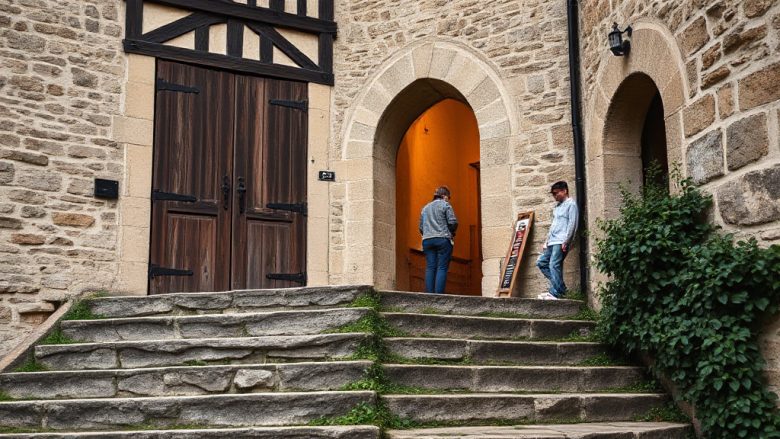
You’re standing outside a historic building. The stone is older than anything you’ve touched before, the doorway is smaller than you expected, and there’s a hand-painted sign by the entrance listing opening times you’re not sure you’ve read correctly. You want to go in. You also feel like you might be intruding, or that you won’t understand what you’re looking at, or that everyone inside will somehow know more than you. So you hover for a minute, take a photo of the facade, and walk on.
That hesitation is the single biggest barrier to getting started with heritage tourism. Not money, not distance, not time. It’s the quiet worry that historic places are for other people — the ones with guidebooks, archaeology degrees or grandparents who talked about the old country. They aren’t. Heritage tourism is just the practice of visiting places because of their history and culture, and the only qualification is curiosity. This guide walks you from that hesitant moment outside the door to a first visit you actually book, enjoy and want to repeat.
What Heritage Tourism Actually Means (and What It Doesn’t)
Heritage tourism covers a huge range of places. Castles, cathedrals, industrial mills, wartime bunkers, restored terraced houses, ancient burial mounds, colonial-era streets, fishing villages, botanical gardens with century-old planting plans, museums housed in former workhouses. If a site exists partly to preserve and explain the past, it counts.
What it doesn’t require is expertise. You don’t need to know the difference between Norman and Gothic before you walk through a church door. You don’t need to have read the interpretation panels in advance. The point is to look at something made by people who lived before you, and to let that raise questions. Why here? Who paid for it? Who was kept out? Those questions are the whole experience, and you can arrive with all of them unanswered.
It also doesn’t have to mean long-haul travel. Some of the most rewarding heritage sites are within an hour of where you already live. The village church with a Norman font. The canal lock that once moved coal. The municipal cemetery with Victorian funerary architecture. Starting locally is genuinely the smartest first move, because it removes the pressure of a big trip and lets you test whether this kind of visiting suits you.
How to Choose Your First Heritage Site
The mistake most beginners make is picking the biggest, most famous site within reach. A vast ruined abbey with forty acres of grounds and three separate museums is a lot to process on a first outing. You’ll spend two hours walking and leave with a vague impression of old stones. Better to start smaller and more specific.
Ask yourself what you already find interesting, then find the historic version of it. If you like food, look for a restored market hall, a historic kitchen garden or a mill that ground flour. If you like machinery, an industrial heritage site will hold your attention far longer than a stately home. If you like stories about ordinary people, a preserved tenement flat or a folk museum will beat a palace every time. Match the site to an existing interest and you’ll never feel out of place, because you’ll be there for the same reason everyone else is — the subject genuinely appeals to you.
Three practical filters help narrow the list:
- Size: under two hours to see properly, for a first visit.
- Interpretation: check whether the site offers panels, a room guide or an audio tour, since these carry you through without prior knowledge.
- Access: confirm opening days before you plan around it. Many smaller heritage sites are volunteer-run and open only a few days a week, or seasonally.
Also consider a guided walk run by a local history group or civic society. Walking tours are low-commitment, usually cheap, and put you in the company of people who ask exactly the same questions you have. It’s the least intimidating introduction to heritage tourism there is.
What to Read Before You Go
You don’t need to study. But twenty minutes of preparation transforms a visit. The trick is to read the right kind of thing.
Skip the dense academic histories and the long Wikipedia article with fifty footnotes. Instead, look for a short overview of the site’s timeline — who built it, when, why, and what happened to it afterwards. A single page is enough. Then find one human detail: a person associated with the place, a dispute, a fire, a rebuilding. One story gives you something to hunt for on site, and hunting for something is what makes a visit memorable rather than dutiful.
If the site is religious, a quick look at the layout helps enormously. Knowing that a church is oriented east, or that the nave is where the congregation stood while the chancel was the priest’s domain, means you’ll read the space instead of just admiring it. If it’s a house, find out who lived there and how many servants they had. If it’s industrial, learn what was made and where it went. That’s the level of detail to aim for — enough to make the place legible, not so much that you’ve used up your curiosity before arriving.
One more thing worth doing: check whether the site has any current conservation work, closures or special exhibitions. Heritage sites are living operations. Scaffolding, restricted routes and rotating displays are normal, and knowing in advance prevents disappointment.
On-Site Etiquette and How to Behave Respectfully
Heritage sites aren’t theme parks. Many are fragile, some are sacred, and a good number are still in active use by communities who care about them deeply. A little awareness goes a long way.
Follow the obvious rules first. Don’t touch surfaces unless invited to — skin oils and abrasion damage stone, textiles and painted finishes over time. Stay on marked paths, because worn edges and compacted ground cause real harm. Respect photography restrictions; flash damages pigments and some objects, and some sites prohibit images for cultural or religious reasons. Keep your voice down in places of worship and in memorial spaces, even when they’re busy with tourists.
Then there’s the subtler etiquette. Don’t treat a living religious building as a museum; if a service is starting, leave quietly or stay and observe respectfully. Don’t climb on ruins, even low ones, and don’t move objects to get a better photo. If a volunteer steward offers information, take it — these people are usually the most knowledgeable sources on site, and a five-minute conversation often teaches you more than an hour of reading panels.
Finally, spend something. Entry fees, guidebooks, a coffee in the cafe, a donation in the box. Most heritage sites run on thin margins, and the money goes directly into the maintenance of the thing you came to see. It’s the simplest way to leave a place better than you found it.
Building the Habit After Your First Visit
Your first heritage visit will probably surprise you, but not in the way you expect. The surprise is usually how absorbing it is to stand in a room where something happened, and how quickly an hour disappears. The second surprise is how much you notice that you’d have walked straight past a month earlier — a datestone, an old doorway, a change in brickwork.
To turn one visit into a habit, keep a simple record. Note the site, the date, one thing you learned and one question you left with. That question becomes your next destination. It’s how heritage tourism quietly builds itself: a mill leads to a canal, the canal leads to a warehouse district, the warehouse district leads to a port. Within a year you’ll have a mental map of your region’s history that no book could have given you.
Consider membership of a heritage organisation if you find yourself visiting regularly — the economics usually work out after a handful of visits, and it removes the pressure to see everything in one go, which is the fastest way to ruin a good site. And if you enjoy a place, go back in a different season. The same building in winter light, with no one else there, is a different experience entirely.
So: pick something small and local. Read one page about it. Turn up, pay in, and let yourself be curious rather than informed. The door you were hovering outside last week is still open, and the worst outcome is that you spend an hour somewhere quiet learning something you didn’t know. That’s not a bad way to pass an afternoon — and it’s how almost everyone who loves heritage tourism started.